
The value-based care trends shaping 2026 are arriving against a backdrop of sustained financial pressure across the healthcare sector.
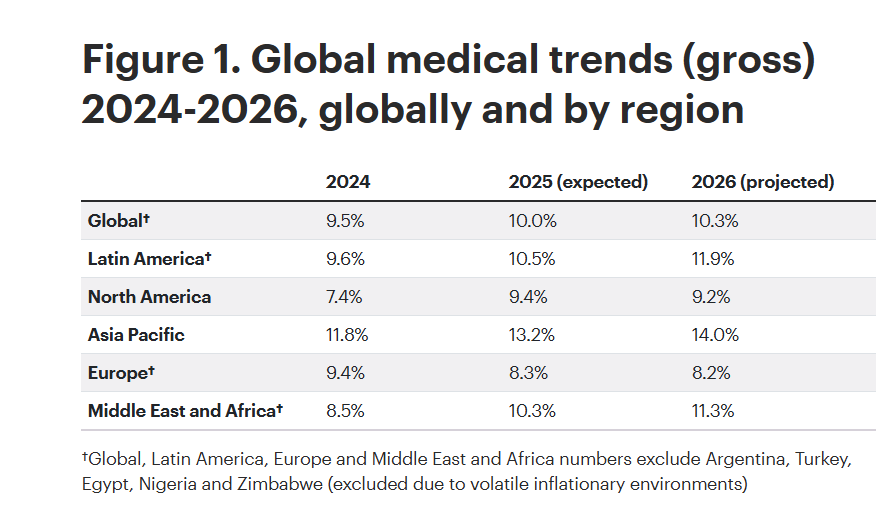
Global medical cost trends are projected to increase by 10.3% in 2026, up from 9.5% increase in 2024 and 10% in 2025, according to WTW's Global Medical Trends Survey. The trend of rising healthcare expenses continues to challenge insurers and employers worldwide.
For hospital quality directors, chief medical officers, and compliance leaders, the message is clear: adaptation is not optional. Healthcare organizations that fail to adjust to rising cost trends risk margin compression and reduced reimbursement potential under value-based models.
Below, we break down the five value-based care trends that will most directly shape hospital performance, compliance obligations, and reimbursement outcomes in the year ahead—and what your organization can do to stay ahead of them.
The Push Toward Advanced Value-Based Models
CMS’s transition from fee-for-service to outcome-driven payment is not a future aspiration—it is the current operating reality, and its pace is accelerating.
In 2026, hospitals and eligible clinicians face tighter alignment requirements across the Merit-based Incentive Payment System (MIPS), MIPS Value Pathways (MVPs), the Alternative Payment Model Performance Pathway (APP), and the Inpatient Quality Reporting (IQR) program.
What this means in practice:
- MVP participation is becoming the expected path for MIPS-eligible clinicians, requiring specialty-focused measure sets that demand more precise data capture than traditional MIPS reporting.
- APP participants in Advanced APMs must demonstrate quality performance at the entity level, adding reporting complexity for health systems managing multiple care sites.
- Hospital Value-Based Purchasing (HVBP) domain weights continue to evolve, placing greater emphasis on clinical outcomes and patient safety alongside cost efficiency.
- IQR measure updates for FY 2026 introduce new electronic clinical quality measure (eCQM) requirements, raising the stakes for hospitals whose data pipelines are not yet optimized.
Hospitals that treat these programs in silos risk overlapping reporting burdens and missed performance opportunities. Integrated quality reporting solutions—like Medisolv’s Hospital Quality Reporting Package—are purpose-built to unify measure management across these programs and reduce redundant effort while improving accuracy.
Integration of AI and Predictive Analytics in Quality Reporting
Artificial intelligence is moving from a peripheral feature to a core component of hospital quality infrastructure.
WTW’s Global Medical Trends 2026 Survey identifies predictive modeling as a top strategy for managing chronic conditions and containing long-term costs—a finding that translates directly to quality reporting priorities.
In the quality reporting context, AI’s most immediate value lies in three areas:
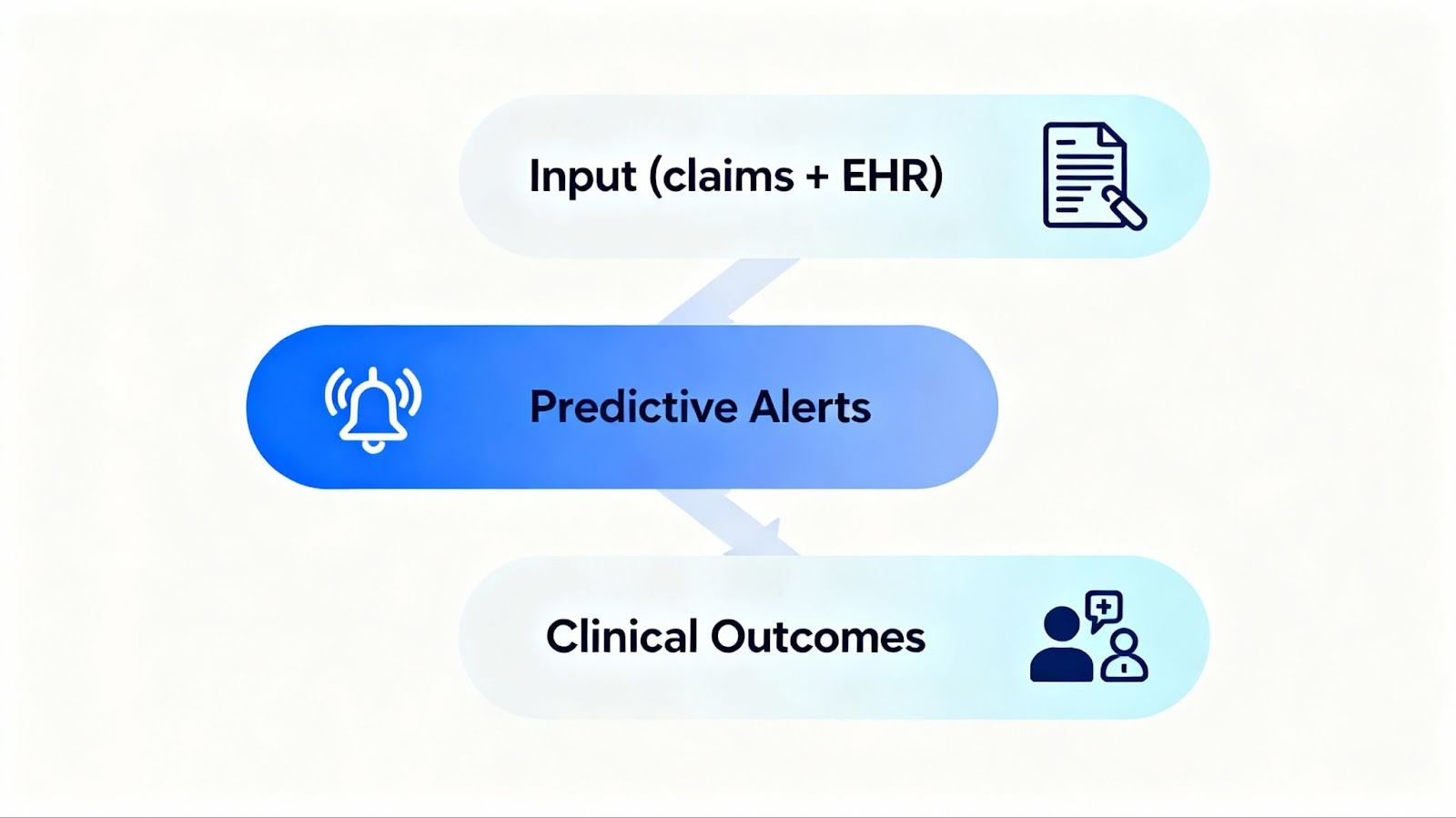
- Risk identification: Predictive algorithms that flag patients at elevated risk for sepsis, readmission, or surgical complications allow clinical teams to intervene before adverse outcomes become reportable events.
- Data validation automation: AI-driven tools can identify documentation gaps, missing data elements, and potential measure exclusion errors in near real time—before submission deadlines, not after.
- Claims and EHR integration: By synthesizing structured and unstructured data from multiple sources, AI platforms produce more complete and defensible measure calculations than manual abstraction.
Think of it the way Medisolv has described it: AI-enhanced reporting platforms function like a "check engine light" for your EHR—surfacing the signals that indicate data quality problems before they become compliance liabilities or cost your hospital reimbursement. As CMS continues to expand eCQM mandates, the organizations that invest in AI-enhanced data pipelines now will have a measurable reporting advantage in 2026 and beyond.
Increased Focus on Health Equity and Social Risk Adjustment
Health equity is no longer a voluntary commitment—it is an emerging CMS reporting mandate.
For 2026, CMS is expanding requirements for stratified quality measure reporting, requiring hospitals to disaggregate outcome data by demographic subgroups including race, ethnicity, and socioeconomic status. The intent is to make care disparities visible so that they can be addressed at both the payer and provider level.
What hospitals need to operationalize in 2026:
- Social determinants of health (SDOH) data collection integrated into the EHR workflow, not bolted on as an afterthought.
- Stratified reporting capabilities that can disaggregate measure performance by CMS-defined demographic categories without requiring manual data manipulation.
- Equity-aware quality improvement planning, informed by subgroup performance gaps, so that interventions are targeted where disparities are greatest.
- MIPS reporting alignment, as equity-related measures and SDOH documentation are increasingly embedded in MVP measure sets.
Medisolv’s MIPS Reporting Package is designed to support this evolving landscape, helping hospitals capture, validate, and report the equity-sensitive data that CMS will increasingly use to evaluate performance. Organizations that build equity reporting infrastructure now will be better positioned when stratified data reporting shifts from voluntary to mandatory across additional programs.




Comments