
Medicare Advantage Retrenchment Continues in 2027, and the CMS Files Show It
CMS describes 2027 Medicare Advantage (MA) as a year of lower premiums and steady choice. The landscape and crosswalk files show another year of plan terminations, benefit reductions, and fewer options for many members.
In its Sept. 28 release, CMS projected that the weighted average monthly MA premium will fall 16.5%, from $14.37 to $12. It also projected that the average Part D premium within MA drug plans will fall 38%, from $11.32 to $7. Those figures are accurate, but they don't describe what most enrollees will experience.
Stable plan totals, significant churn
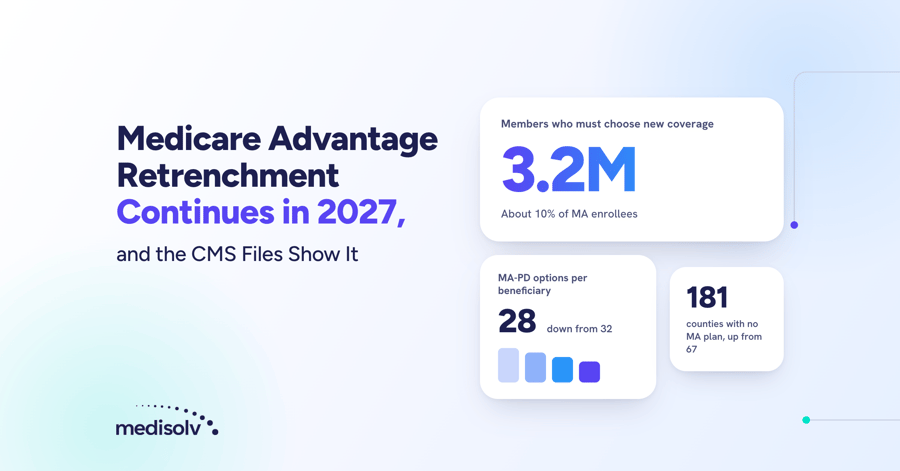
The total number of MA plans barely changes, from 5,553 in 2026 to 5,532 in 2027. That net figure hides a large number of plan additions and cuts. The average beneficiary will have 28 MA-PD options, down from 32, and MA-PD products will fall 8%.
Published estimates of affected enrollees range from 2 million to 4.6 million. Based on my own analysis, I expect at least 3.2 million people, about 10% of enrollees, will need to choose new coverage after their plan is terminated. Another 2.1 million appear to have been moved into a different plan that may not meet their needs. Estimates for 2026 terminations ranged from 2.9 million to 4.6 million, and I think the low end of that range was closest. That puts the 2027 impact at roughly the same level as 2026.
This is larger than I expected. I had predicted well over 1 million members would face forced disruption, but not a repeat of 2026. The scale suggests large plans are prioritizing margin recovery and may be cutting deeper to hedge against rising costs, rate uncertainty, tougher risk adjustment, and weaker Star Ratings.
Who is cutting and who is growing
Among large plans, only Molina is fully exiting mainstream MA, and it will keep its Special Needs Plans (SNPs). Humana has the largest county footprint at 2,694, just ahead of UnitedHealthcare at 2,655. Every major plan is reducing its presence in some counties and expanding in others.
The largest net plan reductions are:
- HCSC: 498 plans
- Centene: 344 plans
- UnitedHealthcare: 140 plans
- Aetna: 123 plans
Humana's exits will affect about 600,000 members, UnitedHealthcare's between 400,000 and 500,000, and CVS Aetna's about 300,000. Together, these three plans account for 45% of all affected members. In most cases, members were moved to another plan from the same insurer. Most affected enrollees are in PPOs, as plans continue to scale back more generous benefit designs.
Location also matters. Choice declines in 29 of 51 states and DC. Florida drops from 611 plans to 560, Ohio from 212 to 180, and Illinois from 157 to 136. The number of counties with no MA plan will rise from 67 to 181.
Premiums tell only part of the story
The 16.5% decline is a weighted average that includes lower premiums for SNPs, so it understates the premium changes facing the general enrollment population. Analyses of continuing general-market MA-PD plans show higher deductibles and out-of-pocket limits, and smaller supplemental dental and Part B giveback benefits. Insurers are also eliminating $0 premium plans, which raises premiums by several dollars for many members.
The standalone Part D (PDP) market is under similar pressure. CMS reports the average standalone premium will rise less than $1, from $35.09 to $36. KFF's analysis is less reassuring. The average number of standalone PDPs falls from 11 to 9, the fourth straight annual decline. KFF also reports there will be no zero-premium PDPs for people without the low-income subsidy, so about 4 million people who paid nothing in 2026 will pay something in 2027, whether they stay or switch.
The end of the premium stabilization program contributes to this. The Part D cost-sharing changes in the 2022 Inflation Reduction Act were not fully funded, and the costs are now moving through the system.
Special Needs Plans are also affected
D-SNP offerings are shrinking, down about 3% in one analysis. Starting in 2027, CMS limits new D-SNP enrollment to people already in a Medicaid plan from the same carrier, where the D-SNP holds an overlapping state Medicaid contract. By 2030, all D-SNP members must be in an aligned plan.
Chronic Care SNPs (C-SNPs) are growing. There is a net increase of 195 C-SNP plan benefit packages, and Devoted accounts for 133 of them, about 68%. Devoted recently closed a $1.2 billion financing deal, which signals its commitment to this strategy. I expect CMS to tighten C-SNP rules eventually.
Other tools plans are using
Plans are also making some products non-commissionable for new enrollment. CMS now allows prospective enrollment caps, though only a little over a dozen plans have used them so far.
Plans are projecting lower enrollment, as they did last year. They were wrong then, because MA continued to look more attractive than traditional Medicare, but growth was only about 2.5%. With this level of retrenchment, negative growth is a real possibility.
Why this keeps happening
The drivers are the same ones I have written about before:
- Medical and pharmacy trends are running 7% to 8%, and the 2.48% rate increase for 2027 does not keep pace.
- The v28 risk model removed more than 7% from base rates, and extrapolated RADV audits are coming.
- Plans expanded too far, too fast.
- Star Ratings add pressure. Federal quality bonus spending reached $13.4 billion in 2026, yet only 68% of MA enrollees are in bonus-eligible plans, down from 75% and the lowest since 2018. Based on Plan Preview 2 cut points, average measure values, and average measure ratings, I expect plans to perform about the same collectively, or slightly worse.
What this means for members
I view this as rationalization, not abandonment, of MA. More than 99% of beneficiaries still have access to an MA plan, and 97% have at least 10 choices. MA remains popular and continues to outperform traditional Medicare.
Still, millions of people will receive a termination notice this fall, and many more will find leaner benefits in the plans they keep. Members should not assume their plan will stay the same. They should read the annual notice of change, compare options on Plan Finder, and check their doctors, drugs, and out-of-pocket limits.
See what’s driving your Stars performance.
As Medicare Advantage plans face continued market pressure, understanding where performance is headed matters more than ever. Medisolv helps health plans turn Stars data into actionable insights, identify performance opportunities, and plan ahead with greater confidence.
Explore Medicare Advantage Stars Analytics →
Want the full analysis? Read Marc's original article on Healthcare Labyrinth.



Comments